
Somewhere behind the clothes you actually wear is probably a shirt you forgot you owned, a pair of shoes that seemed like a good idea at the time and at least one hanger holding something you haven’t touched in years.
October 9 is Clean Out Your Closet Day — which makes it as good a time as any to find out what’s been hiding back there.
Whether you’re making room for a new season, simplifying your daily routine or helping a parent downsize, cleaning out a closet can feel like a bigger project than it needs to be. You don’t have to empty everything onto the bed and spend the rest of the day wondering what you’ve done.
A few simple strategies can help you decide what stays, what goes and how to keep your closet manageable long after the cleanout is finished.
Start With What You Actually Wear
Start with a simple question: Would I choose to wear this today?
If the answer is yes, keep it. If you’re unsure, look a little closer. Does it fit comfortably? Is it in good condition? Do you like the way you feel when you wear it?
And remember: There’s a difference between something that still fits and something that still fits your life.
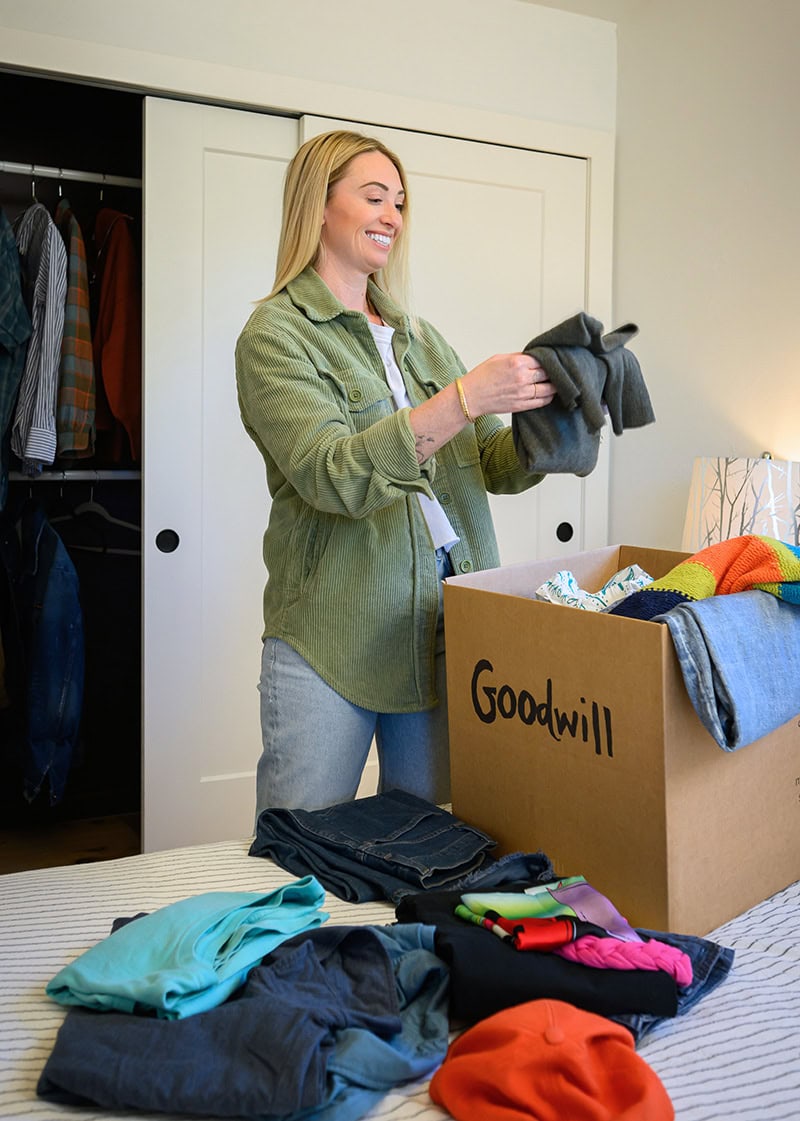
The clothes you needed for a former job, an old routine or a different season of life may be perfectly good — and still no longer belong in your closet. The same goes for things you’ve kept because they were expensive, because you might need them someday or because surely there will eventually be an occasion for that very specific outfit.
If you’re not wearing something, keeping it doesn’t recover what you spent on it. But letting it go may give someone else the chance to put it to good use.
Give Yourself a Maybe Pile
Not every decision needs to happen immediately.
If you’re stuck on something, put it in a maybe pile and keep going. Once you’ve sorted through more of your closet, those decisions often become easier.
For the stubborn ones, try the clothes on. Pair them with something you already wear. Walk around for a few minutes. Sometimes that’s all it takes to realize you’ve been keeping the idea of a piece of clothing more than the clothing itself.
Another useful test: If you saw this in a store today, would you buy it again?
If you’re helping a parent or loved one downsize, give the maybe pile even more room. A sweater can be just a sweater to you and a memory to someone else. Start with the things they already know they no longer need, use or want, and give them time with the things that carry more meaning.
See What You Actually Have
Once you’ve made some decisions, group what remains by category — sweaters with sweaters, shoes with shoes, handbags with handbags and so on.
You may discover you own a surprising number of nearly identical black shirts.
Seeing similar items together makes duplicates easier to spot, but it can reveal something else, too: what you actually use. You may have five cardigans but consistently reach for the same two. Or you may realize that you have plenty of clothes but are missing one basic piece that would make several of them more useful.
A cleanout can also turn into a little shopping trip through your own closet. Once the things you don’t use are out of the way, you may rediscover something you’d forgotten about — and suddenly see how it works with what you wear now.
The goal isn’t necessarily to own less. It’s to make your closet work better for you.
Make Decluttering Part of Your Routine
Once your closet is organized the way you want it, make the next cleanout easier.
Place a box or bag at the bottom of the closet. When you notice something that no longer fits, never gets worn or simply isn’t for you anymore, put it in the bag.
When it’s full, it’s ready for Goodwill.
And one last step: finish the job. A bag of donations sitting in the hallway, garage or spare closet is really just clutter that changed addresses.
Building donation into your routine means unwanted items are less likely to work their way back into your closet — and you won’t have to start from scratch the next time you decide it’s time for a cleanout.

Give Your Gently Used Items Another Life
Once you’ve finished, bring the clothing, shoes, accessories and other gently used items you no longer want to your local Goodwill.
All of our traditional retail stores offer drive-up donation bays that are open during the same hours as the store. Our donation attendants can help unload your items and provide a donation receipt for tax purposes.
Your donations help put useful clothing and household goods back into circulation — but their impact doesn’t stop there. Revenue generated through the sale of donated goods helps support programs and services that connect people in our communities with training, resources and opportunities to build skills and move toward their employment goals.
So whether you’re clearing out your own closet, helping someone you love make a fresh start or finally dealing with that bag you’ve been stepping around for three weeks, take it one piece at a time.
You might end up with a little more room, a closet that works better for the life you’re living now — and a few things ready for their next chapter.